
Indigenous Governance Database
Environment and Natural Resources
Honoring Nations: What is Good Tribal Governance and Why is it Important?: Tribal Leaders' Perspectives
Moderator Joseph P. Kalt facilitates a rich discussion by an impressive panel of Native nation leaders about the role leaders play in building and sustaining successful tribal programs.
Honoring Nations: Peter Captain, Sr., James Landlord, Pat Sweetsir, and Clarence Alexander: The Yukon River Inter-Tribal Watershed Council
Representatives of the Yukon River Inter-Tribal Watershed Council present an overview of the Council's work to the Honoring Nations Board of Governors in conjunction with the 2005 Honoring Nations Awards.
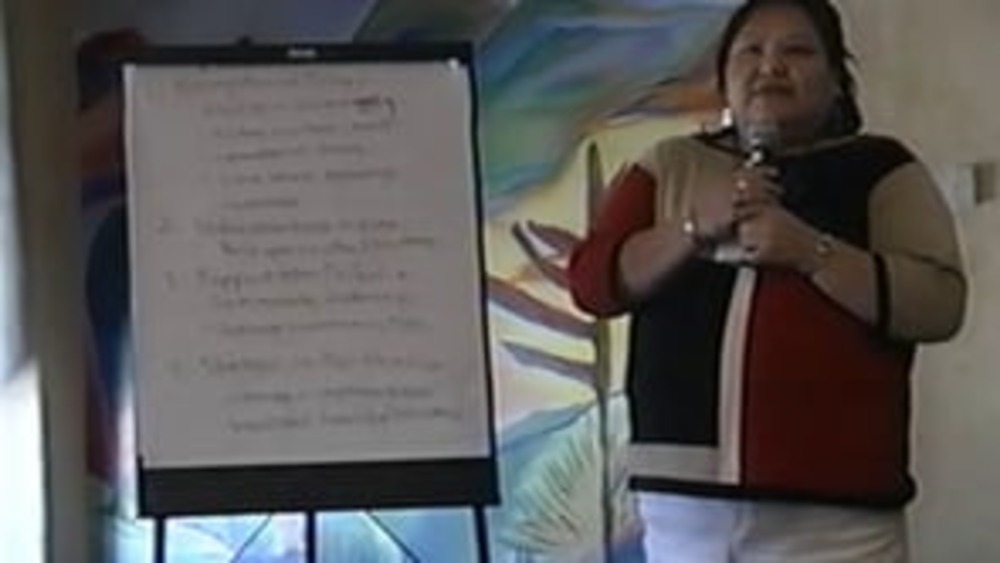
Honoring Nations: Elizabeth Woody: Environment and Natural Resources
Elizabeth Woody reports back to her fellow Honoring Nations symposium attendees the consensus from the environment and natural resources breakout session participants, synthesizing their deliberations into four key elements for nation-building success in the environmental and natural resource…
Honoring Nations: Pat Cornelius: Oneida Nation Farms
Manager of the Oneida Nation Farms Pat Cornelius presents an overview of the organization's work to the Honoring Nations Board of Governors in conjunction with the 2005 Honoring Nations Awards.
Honoring Nations: Steve Terry and Rory Feeney: Miccosukee Tribe Section 404 Permitting Program
Miccosukee Tribe Land Resources Manager Steve Terry and Fish and Wildlife Director Rory Feeney present an overview of the Miccosukee Tribe Section 404 Permitting Program to the Honoring Nations Board of Governors in conjunction with the 2005 Honoring Nations Awards.

Honoring Nations: Cedric Kuwaninvaya: The Hopi Land Team
Former Chairman of the Hopi Land Team Cedric Kuwaninvaya presents an overview of the tribal subcommittee's work to the Honoring Nations Board of Governors in conjunction with the 2005 Honoring Nations Awards.
Honoring Nations: Rick George: The Umatilla Basin Salmon Recovery Project: Building on Success
Rick George, former Program Manager for Rights Protection and Environmental Planning with the Confederated tribes of the Umatilla Indian Reservation, shares what he sees as the foundational characteristics of the Umatilla Basin Salmon Recovery Project and other examples of successful,…

Honoring Nations: Miriam Jorgensen: Achieving Good Governance: Cross-Cutting Themes
Miriam Jorgensen, Director of Research for the Native Nations Institute and the Harvard Project on American Indian Economic Development, shares the cross-cutting themes of good governance that exist among the Honoring Nations award-winning programs.
Honoring Nations: Aaron Miles: Idaho Gray Wolf Recovery Program
Aaron Miles, Natural Resource Manager for the Nez Perce Tribe, shares the progress of the Idaho Gray Wolf Recovery Program and talks about how the program hopefully will begin to seed a change in the mindset among those human beings who share the wolves' environment.
Wilma Mankiller: What it Means to be an Indigenous Person in the 21st Century: A Cherokee Woman's Perspective
Former Principal Chief of the Cherokee Nation Wilma Mankiller discusses the common misperceptions that people have about Indigenous people in the 21st century, and the efforts of Indigenous peoples to maintain their identity, cultures, values, and ways of life.

Honoring Nations: Charlie O'Hara: Developing Productive Government-to-Government Relations: Swinomish Cooperative Land Use Program
Charlie O'Hara discusses the Swinomish Cooperative Land Use Program and the importance of developing productive mutually beneficial government-to-government relations.
Great Tribal Leaders of Modern Times: Billy Frank, Jr.
Produced by the Institute for Tribal Government at Portland State University in 2004, the "Great Tribal Leaders of Modern Times" interview series presents the oral histories of contemporary tribal leaders who have been active in the struggle for tribal sovereignty, self-determination, and treaty…

Great Tribal Leaders of Modern Times: Roy Sampsel
Produced by the Institute for Tribal Government at Portland State University in 2004, the landmark “Great Tribal Leaders of Modern Times” interview series presents the oral histories of contemporary leaders who have played instrumental roles in Native nations' struggles for sovereignty, self-…
Great Tribal Leaders of Modern Times: Oren Lyons
Produced by the Institute for Tribal Government at Portland State University in 2004, the landmark “Great Tribal Leaders of Modern Times” interview series presents the oral histories of contemporary leaders who have played instrumental roles in Native nations' struggles for sovereignty, self-…

Maamakaadenbaagwad (it is amazing): The Miracle of the Walleye
This video, produced by the Red Lake Department of Natural Resources and the youth at Project Preserve, explains the history and progress of the Red Lake Walleye recovery program.
From the Rebuilding Native Nations Course Series: "The Benefits of Intergovernmental Relations"
Former Nez Perce Tribal Treasurer Jaime Pinkham discusses the concrete benefits of engaging in intergovernmental relations for Native nations.
Regis Pecos: The Role of Core Values in Cochiti Governance and Renewal
In this excerpted video, former Cochiti Governor Regis Pecos provides an overview of the core values that are integral to Cochiti's culture and way of life, and shows how his people relied on the application of those core values to overcome a catastrophe and rebuild its nation and community. This…
Honoring Nations: Gabriel Lopez and Shannon Martin: Government-to-Government Relations (Q&A)
Gabriel Lopez and Shannon Martin field questions from the audience about their nations' Honoring Nations award-winning programs.
Honoring Nations: Shannon Martin: Ziibiwing Center of Anishinabe Culture and Lifeways
Ziibiwing Center of Anishinabe Culture & Lifeways Director Shannon Martin presents a history of the Ziibiwing Center and discusses the work it has been engaged in since it won an Honoring Nations award in 2006.
Honoring Nations: Karen Diver: Sovereignty Today
Fond du Lac Band of Lake Superior Chippewa Chairwoman Karen Diver argues that for Native nations to aggressively assert their sovereignty in order to achieve their goals, they must develop capable governing institutions to put that sovereignty into practice.