
Indigenous Governance Database
Laws and Codes
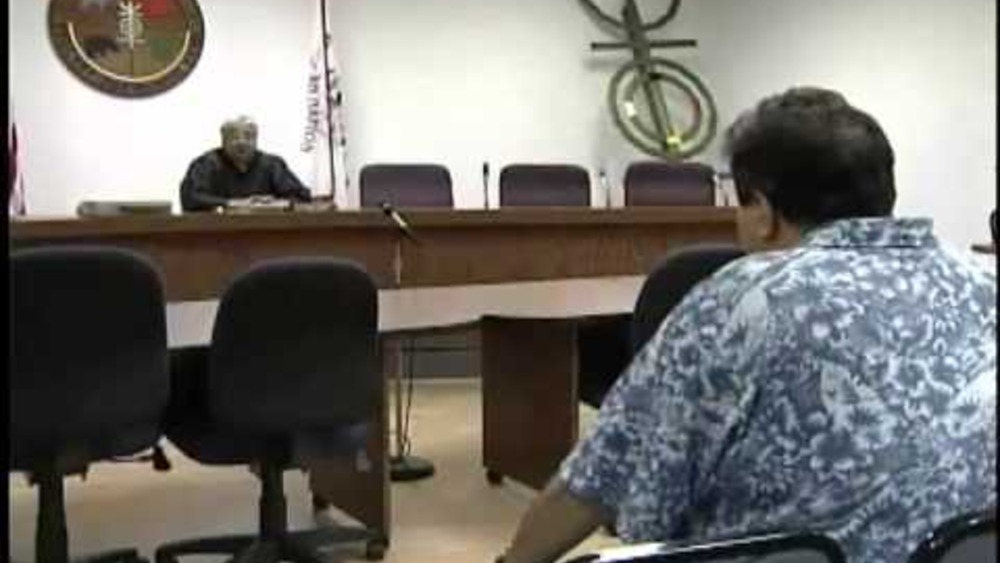
Tribal Nations - The Story of Federal Indian Law
"Tribal Nations - The Story of Federal Indian Law" and discusses how the U.S. Supreme Court has handled Indian sovereignty over the past 50 years.
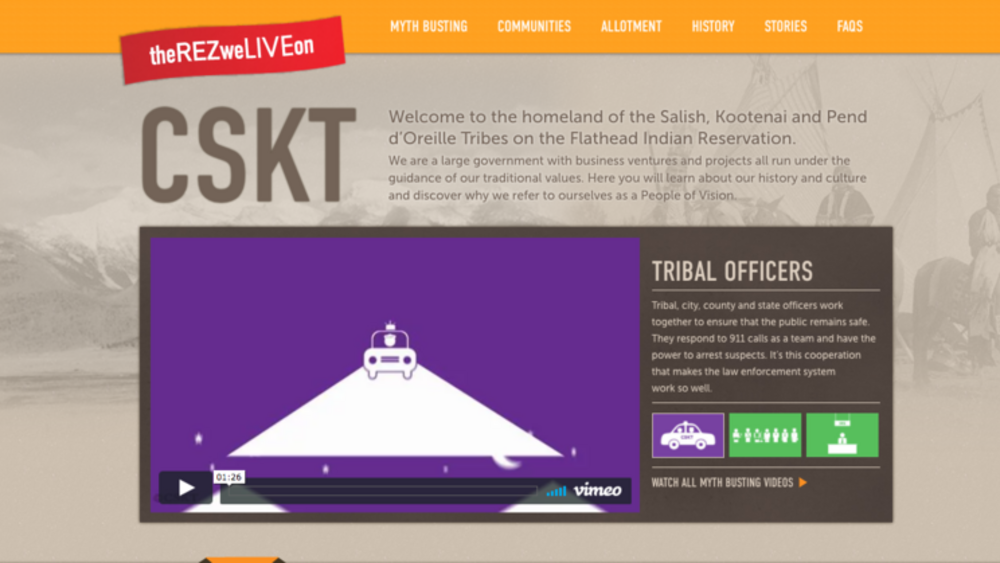
The Rez We Live On
The Confederated Salish and Kootenai Tribes produced this series of online videos in an effort to dispel untruths about life on the Flathead reservation in Montana. Consisting of 10 short, graphically based videos on topics ranging from Sovereignty to Taxes, "The Rez We Live On" site is geared…
Indigenous Governance Toolkit
The Indigenous Governance Toolkit is an online resource developed for Indigenous nations, communities, individuals and organisations searching for information to build their governance. It covers all the basics — your rules, values, culture, membership, leadership, and decision making — and has…
Processes of Native Nationhood: The Indigenous Politics of Self-Government
Over the last three decades, Indigenous peoples in the CANZUS countries (Canada, Australia, New Zealand, and the United States) have been reclaiming self-government as an Indigenous right and practice. In the process, they have been asserting various forms of Indigenous nationhood. This article…
Wolves Have A Constitution: Continuities in Indigenous Self-Government
This article is about constitutionalism as an Indigenous tradition. The political idea of constitutionalism is the idea that the process of governing is itself governed by a set of foundational laws or rules. There is ample evidence that Indigenous nations in North America–and in Australia and New…

Enabling the Data Revolution: An International Open Data Roadmap
Open data in the context of indigenous peoples and communities can be understood as a double-edged sword. On the one hand, open data can help indigenous communities, both internally and externally. Internally, it can be used to inform policy, allocate resources, and set a vision for indigenous…
Ngurra-kurlu: A way of working with Warlpiri people
Ngurra-kurlu is a representation of the five key elements of Warlpiri culture: Land (also called Country), Law, Language, Ceremony, and Skin (also called Kinship). It is a concept that highlights the primary relationships between these elements, while also creating an awareness of their deeper…

The Integration of Customary Law into the Australian Legal System
The theme of my address this morning emphasizes the important role that Indigenous people have, to take charge of our own destinies. The maintenance and integration of Aboriginal customary law is an essential part of this. It cannot be repeated often enough that a legal system must reflect the…
Culture and Law: Preliminary Findings in a Review of 100+ Tribal Welfare Codes
Over the last 35 years numerous tribes have created their own child welfare standards. By crafting child welfare codes that balance traditional culture and contemporary needs, tribes both protect member children (and their families) in culturally appropriate ways and reaffirm their sovereign…
Traditional Governance and Constitution Making among the Gitanyow
This paper is a report on traditional governance and constitution making among the Gitanyow people prepared for the Gitanyow and for the First Nations Governance Centre. The Gitanyow are well along in the development of a national constitution based on traditional governance, and this paper will…
New Zealand's Constitution: A Report on a Conversation He Kotuinga Korero mo Te Kaupapa Ture o Aotearoa
The appointment of the Constitutional Advisory Panel in August 2011 was another step in a longer and continuing conversation about how to govern the people, land and resources of Aotearoa New Zealand.The Panel was appointed as part of the Consideration of Constitutional Issues, which was agreed to…
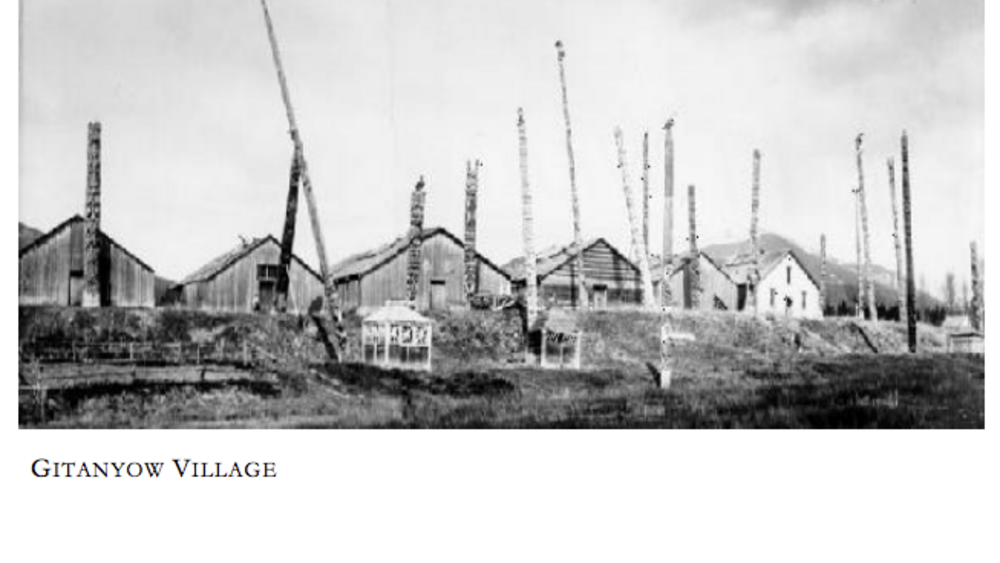
The Gitanyow Ayookxw: The Constitution of the Gitanyow Nation
WE are the Gitanyow peoples. We have a long-standing and rich oral tradition which speaks to all aspects of our lives. This written Constitution must be interpreted and understood in the context of our oral history and oral traditions... THEREFORE, by virtue of our inherent right to…
Tribal Nations and the United States: An Introduction
Tens of millions of Indigenous peoples inhabited North America, and governed their complex societies, long before European governments sent explorers to seize lands and resources from the continent and its inhabitants. These foreign European governments interacted with tribes in diplomacy, commerce…

Redefining Tigua Citizenship
The materials in this informational guide are designed to provide you with important background information ”such as Tigua history, tribal population profiles, and fiscal impacts” related to upcoming membership criteria changes. Project Tiwahu is an Ysleta del Sur Pueblo-wide initiative to reclaim…
Courts & Peacemaking in the Navajo Nation: A Public Guide
The history of our judiciary begins in our ancient history. According to the Journey Narrative, the People journeyed through four worlds and, in the course of their journey, came upon many problems both natural and caused by the People, which had to be resolved before the journey…
Tribal Code Development Checklist for Implementation of Special Domestic Violence Criminal Jurisdiction
This checklist (click to download) is designed as a tool to assist tribal governments seeking to develop tribal codes that implement special domestic violence criminal jurisdiction (SDVCJ) under section 904 of VAWA 2013. Tribal governments will likely be amending existing criminal codes, and every…
Rethinking Rewriting: Tribal Constitutional Amendment and Reform
This essay examines the recent wave of American Indian tribal constitutional change through the framework of subnational constitutional theory. When tribes rewrite their constitutions, they not only address internal tribal questions and communicate tribal values, but also engage with other…
Peacemaking Program of the Judicial Branch of the Navajo Nation
The concept of peacemaking or hózh̨óji naat’aah goes back to the beginning of time and is embedded in the journey narrative. In fact, according to the journey narrative, the Holy People journeyed through four worlds. In the course of their journey, they came upon many problems, which were either…
Resource Center for Implementing Tribal Provisions of the Violence Against Women Act (VAWA): Webinars
The Intertribal Technical-Assistance Working Group on Special Domestic Violence Criminal Jurisdiction (ITWG) has participated in a series of webinars focused on defendants' rights issues (including indigent counsel); the fair cross section requirement and jury pool selection; prosecution skills;…
Indian Tribes and Human Rights Accountability
In Indian country, the expansion of self-governance, the growth of the gaming industry, and the increasing interdependence of Indian and non-Indian communities have intensified concern about the possible abuse of power by tribal governments. As tribes gain greater political and economic clout on…